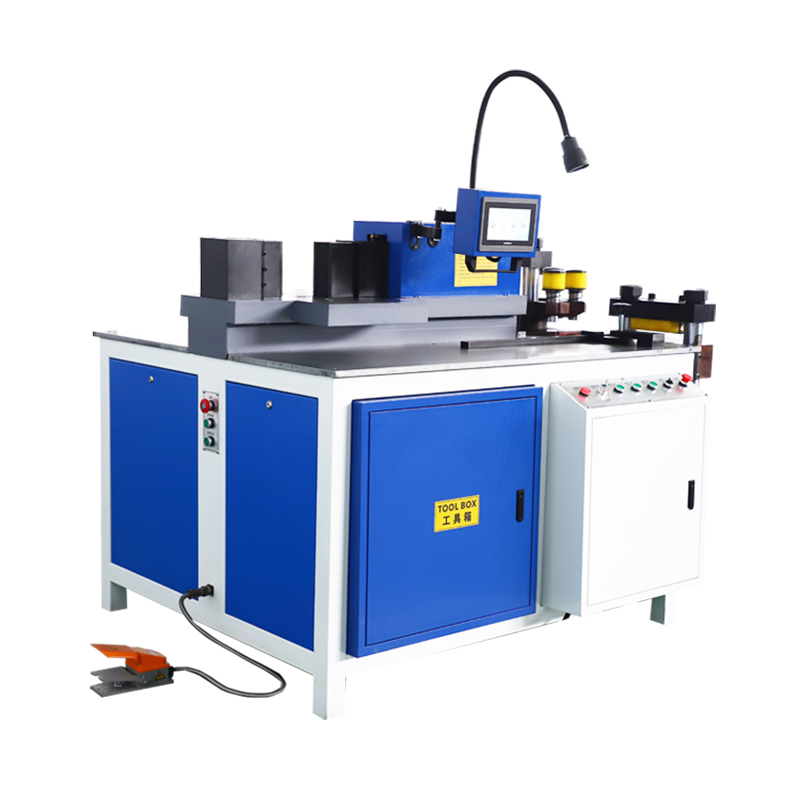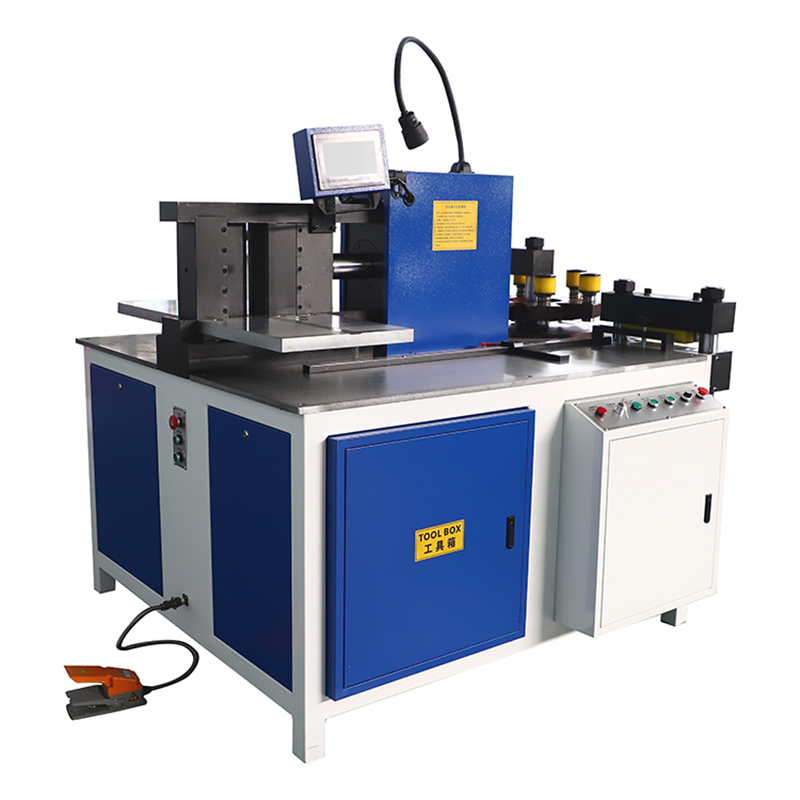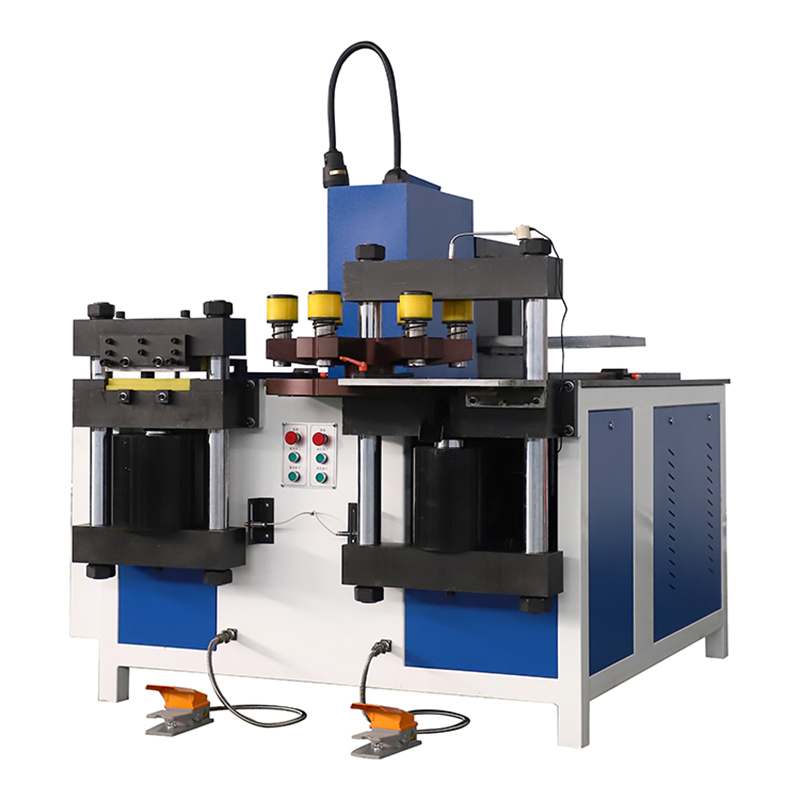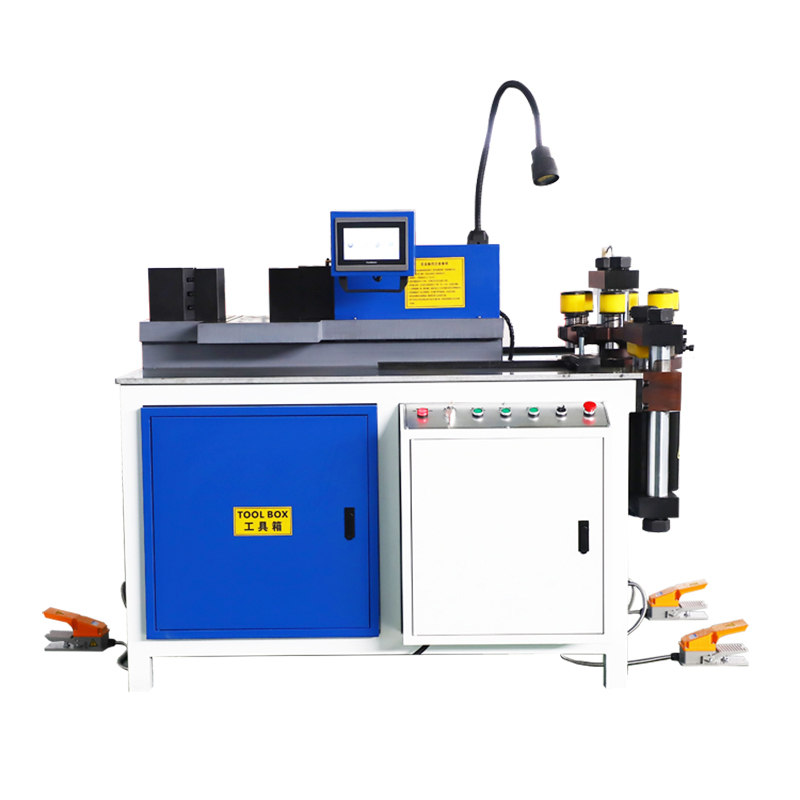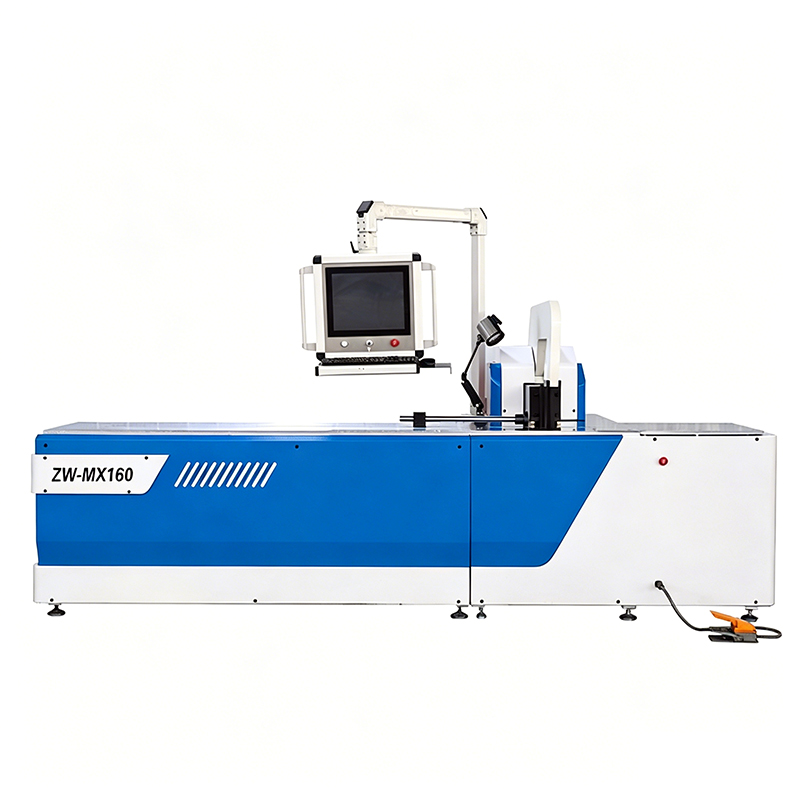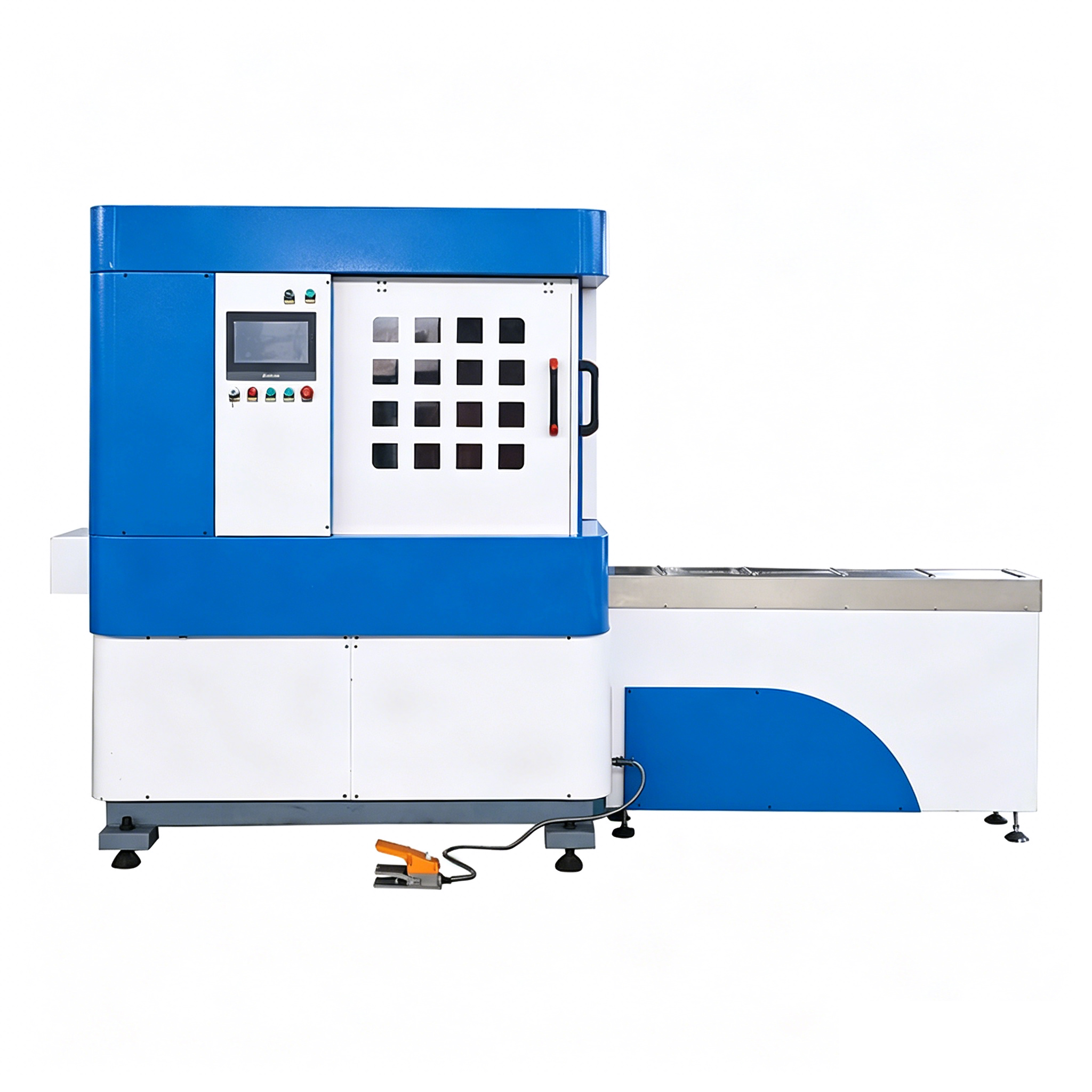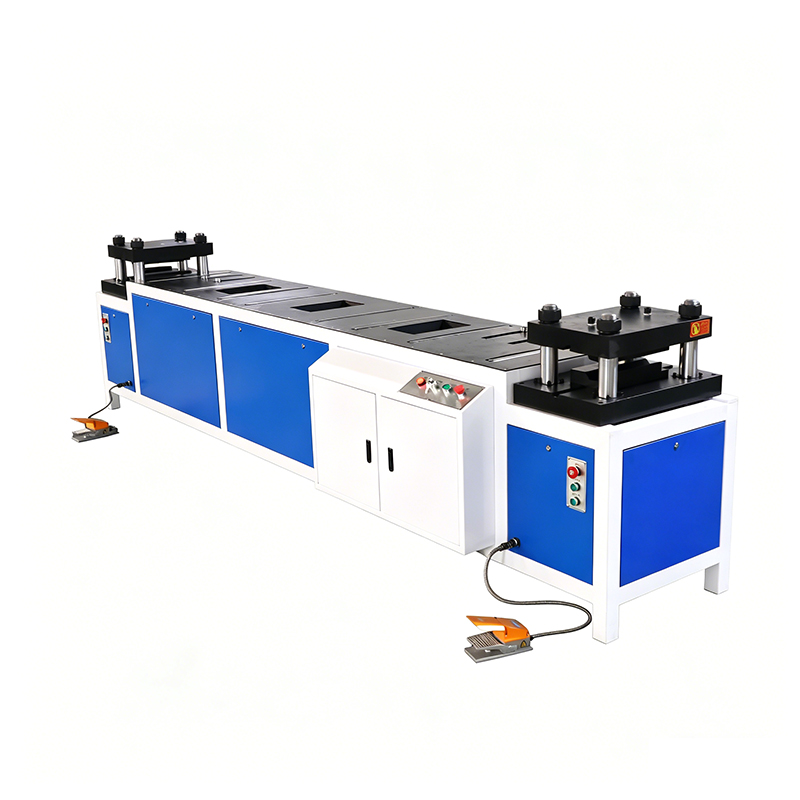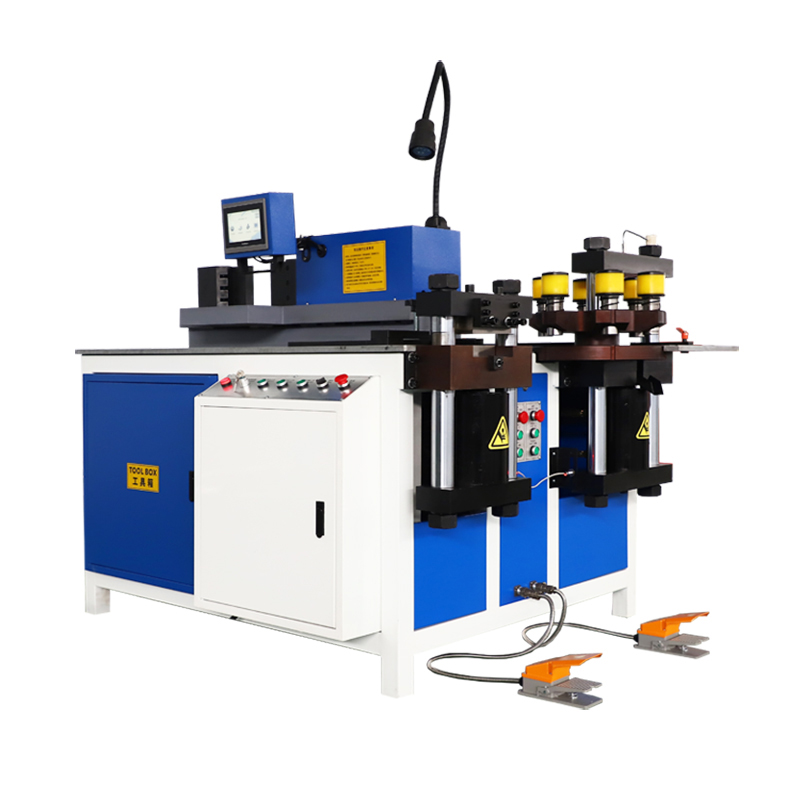

When purchasing busbar processing equipment, many enterprises specializing in complete electrical sets and power construction often encounter models designated as 303, 503, or 803. Our company classifies equipment specifications using the designations KSSK-303, BSSK-503, and BSSK-803. The numbers within these model names are key indicators for selection; understanding them ensures the equipment matches workshop processing needs and prevents issues such as insufficient power or processing limitations. Here, we break down the meaning of these parameters and the application scenarios for each model.
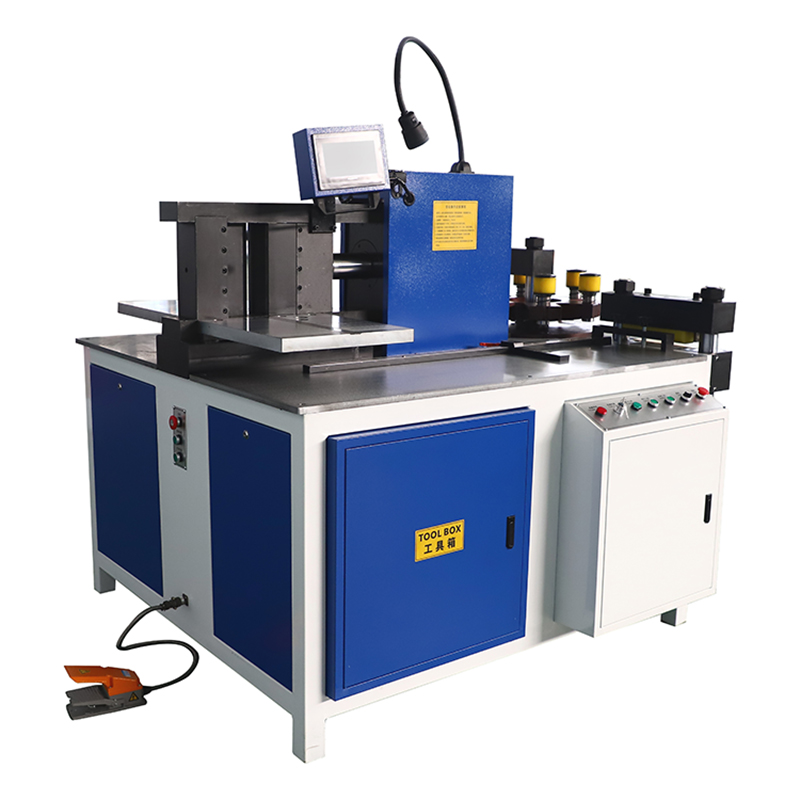
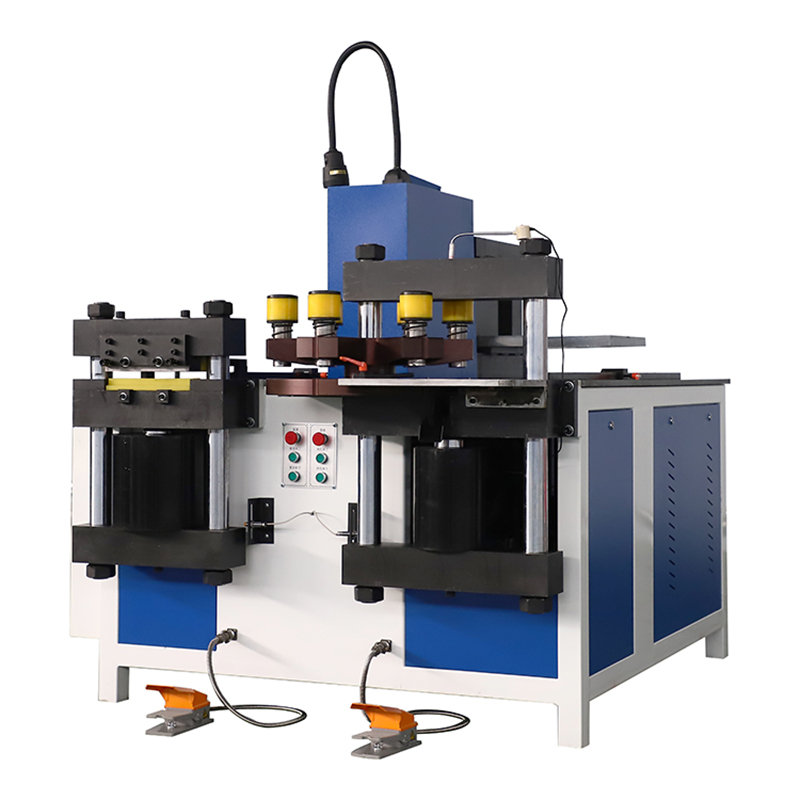
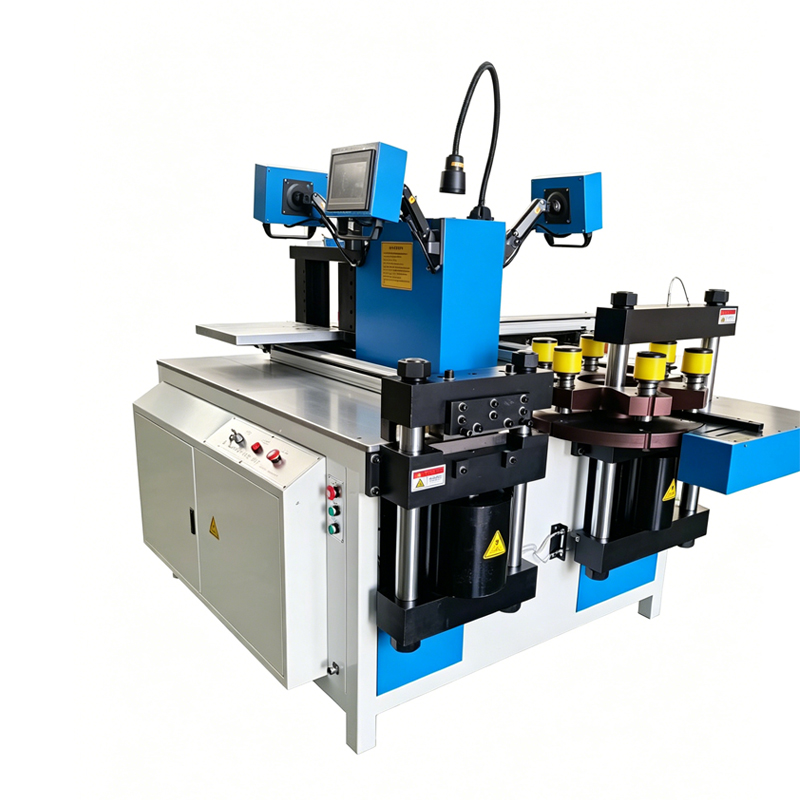
Under standard industry labeling conventions, the numbers 30, 50, and 80 represent simplified abbreviations for the equipment's nominal hydraulic pressure, corresponding to hydraulic output forces of 300 kN, 500 kN, and 800 kN, respectively. These pressure ratings determine the maximum thickness and width of the copper or aluminum busbars that can be processed, clearly distinguishing the capabilities of the three models: the 300 kN model handles copper busbars up to 16 mm thick and 160 mm wide; the 500 kN model accommodates busbars up to 16 mm thick and 260 mm wide; and the heavy-duty 800 kN model can process large-specification copper bars up to 20 mm thick and 300 mm wide. The final digit, "3," indicates the inclusion of three processing stations: shearing, punching, and bending.
Three Mainstream CNC Busbar Machines
|
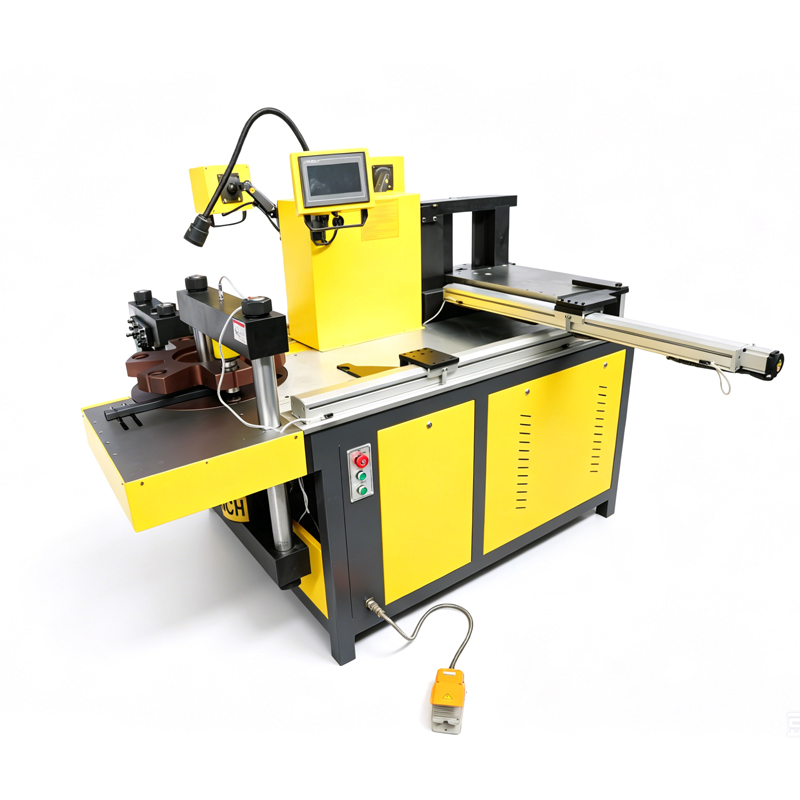
Open-type 303 busbar processing machineKSSK-303 open-type 3-station busbar processing machine for 160×16mm copper/aluminum busbars...
|
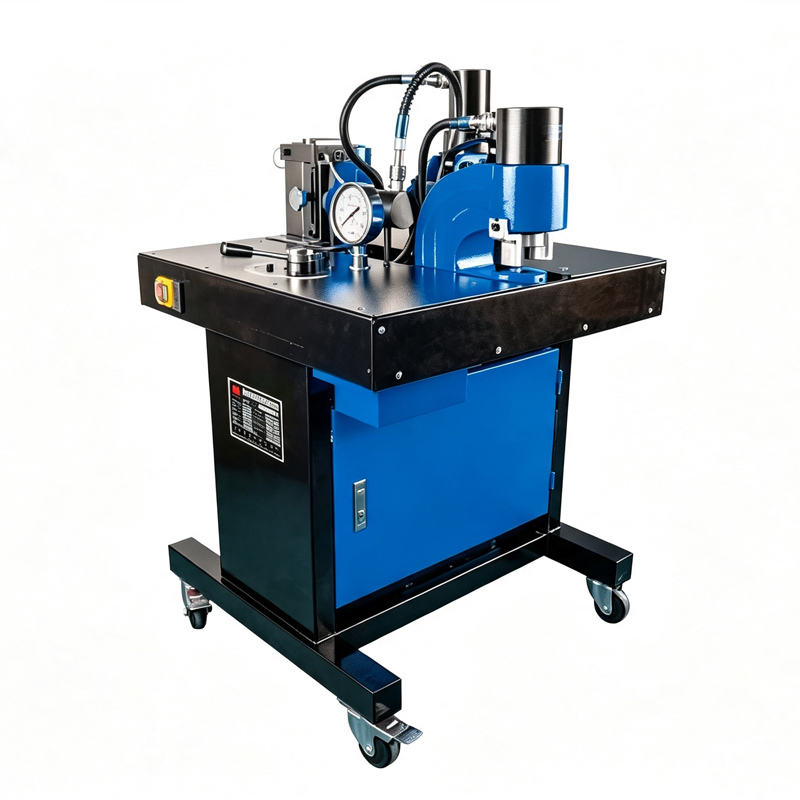
BSSK503 Busbar MachineThe 503 type busbar processing machine is a three-position integrated busbar processing...
|
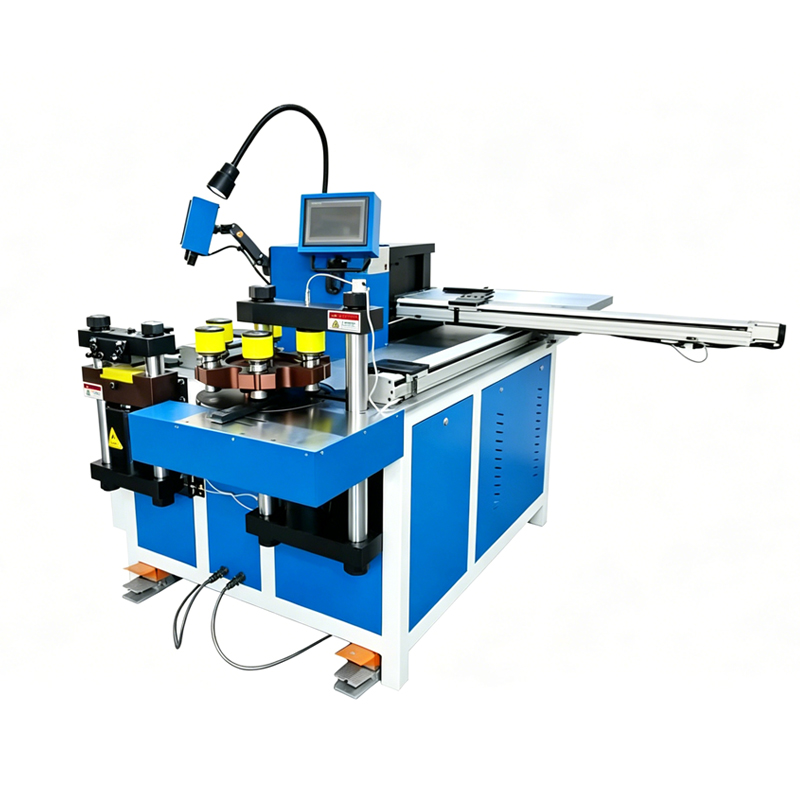
803 Three-position Busbar Processing MachineThe 803 three-position busbar processing machine is a heavy-duty three-in-one equipment...
|
Application Scenarios for the 300kN (Model 303) Compact Busbar Machine
This unit processes copper busbars up to 16mm x 160mm. It features a lightweight, compact design and is easy to operate, making it ideal for small-scale power equipment factories, residential electrical installations, and the fabrication of distribution cabinets for small commercial shops. Industry data indicates that approximately 60% of small-scale power infrastructure projects utilize the 303 series; while it perfectly meets the needs for batch processing of small-specification, low-voltage busbars, it is unsuitable for handling large-cross-section or extra-thick copper bars.
Application Scenarios for the 500kN (Model 503) Mid-sized Busbar Machine
Processing capacity increases to 16mm x 260mm. With ample hydraulic force, it ensures stable forming during bending, punching, and shearing operations. It is well-suited for power distribution in medium-sized factories, complete switchgear for office buildings, and standard commercial/industrial power infrastructure. Used by 75% of mid-sized electrical fabrication shops, the 503 series strikes an excellent balance between processing capability and cost, making it a highly versatile, mainstream choice.
Application Scenarios for the 800kN (Model 803) Heavy-duty Busbar Machine**
Capable of processing massive busbars up to 20mm thick and 300mm wide, this machine delivers powerful hydraulic output. It is designed for demanding applications such as substations, power plants, large industrial facilities, and the manufacture of high-voltage complete equipment sets. Selected for 90% of large-scale power infrastructure projects, the 803 series easily handles the wide, thick copper or aluminum bars required for high-current systems. Due to its large footprint, a dedicated workstation is required, and operation by professional personnel is recommended.
Additional Key Points for Selecting a Busbar Machine
Determining the required tonnage is merely the first step; actual selection requires a multi-dimensional assessment. Factors such as CNC precision, stability during continuous operation, ease of use, and manufacturer support services should not be overlooked. Even among machines of the same tonnage from different manufacturers, significant differences exist regarding CNC systems, tooling configurations, and structural rigidity. Buyers should make comparisons based on their workshop's production capacity, budget, and long-term production plans. The equipment in the complete electrical equipment manufacturing industry is currently evolving rapidly, with continuous optimizations being made to the CNC programming and hydraulic structures of busbar processing machines; therefore, priority should be given to purchasing equipment that features mature technology and is produced via standardized mass manufacturing. It is also advisable to consult with supplier technicians regarding the standard thicknesses and widths of the busbars typically processed; this allows engineers to precisely match the machine model to the required tonnage, thereby avoiding issues such as undersized equipment struggling with heavy loads or wasted production capacity.
In summary, the 303, 503, and 803 model designations—corresponding to hydraulic forces of 300 kN, 500 kN, and 800 kN, respectively—serve as the primary benchmarks for distinguishing busbar processing capabilities. By matching the machine model to their specific project scale and busbar processing specifications, and subsequently evaluating factors such as precision, stability, and budget, enterprises can select the ideal busbar processing equipment for their workshop, ensuring efficient and stable operations.